In stock now: Hikvision CCTV cameras & recorders, priced and ready to order  Shop now →

Sunnovate Systems
Home Projects

Home/Energy

Power that does not depend on the grid

Solar, inverters and storage sized against the load you actually run — for homes, offices, shops and facilities across Nigeria.

Why systems disappoint

Most bad solar experiences are sizing failures, not product failures

An inverter bought by rating alone trips when the fridge compressor starts. A battery bought by price runs flat at 2am. An array bought to fit the budget never fully recharges the bank, so the system quietly degrades.

Every one of those outcomes comes from skipping the load assessment. It is the least glamorous part of the process and the only part that determines whether the system works.

What we design and install

The four parts of a working energy system

Each one has to be specified against the other three. That is the whole job.

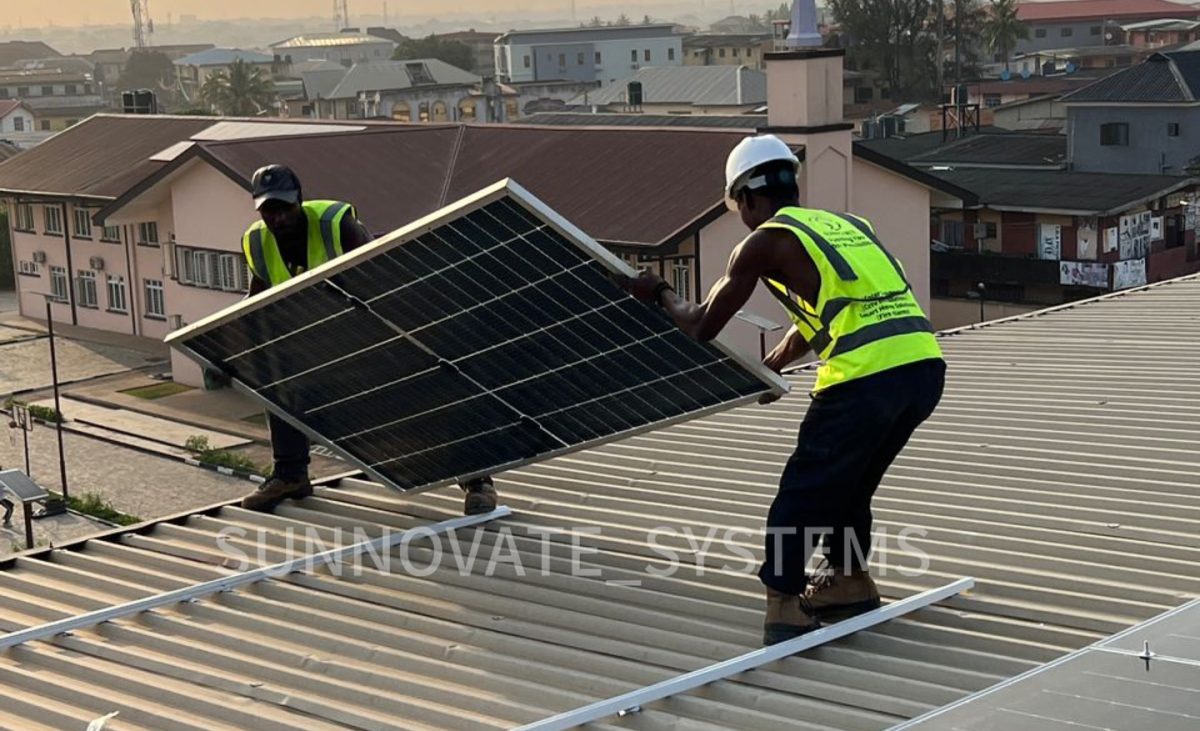
Sunnovate engineers mounting a solar panel on a metal roof

Component 01

The solar array

Monocrystalline, polycrystalline or bifacial modules, laid out for your roof orientation and shading rather than dropped in rows. We survey the roof before we specify a single panel.

Roof survey · Shade analysis · Mounting design

Explore Solar Systems

Hybrid inverter

Rated for your starting loads, not just your running loads, so motors and compressors do not knock the system offline.

Single phase · Three phase · Grid-interactive

Battery storage

Capacity set by the hours of autonomy you need, with depth of discharge accounted for so the usable figure is the real figure.

Lithium · Tubular · Rack-mount

Installation & commissioning

Our own engineers fit, wire, test and hand over the system, then show you how to read it.

Fitting · Testing · Handover

Who we design for

Two very different sizing problems

Homes, apartments and estates

The design question in a home is overnight autonomy. Daytime load is modest and largely covered by the array; the system is judged on whether it carries the household from evening through to sunrise without anyone thinking about it.

Lighting, fans, refrigeration and connectivity as the always-on base

Air conditioning assessed separately — it changes the whole design

Pumps and irons treated as short high-draw events, not continuous load

Estate installations coordinated across units where required

Explore Residential Energy
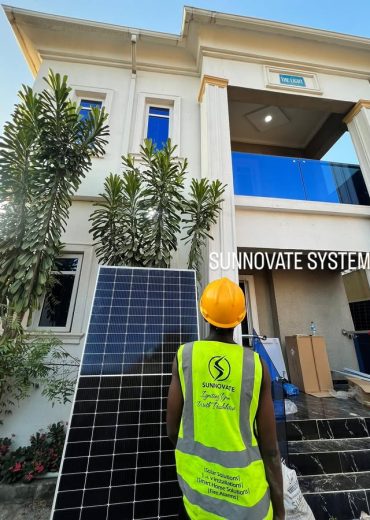
Sunnovate engineer installing solar panels at a residential building

Offices, shops and facilities

Commercial sizing is about trading hours. The load is concentrated in the working day, which suits solar well, but the cost of an outage is measured in lost revenue rather than inconvenience — so the priority shifts to continuity.

Load profiled across the trading day rather than averaged

Critical circuits identified and prioritised on the backup path

Three-phase supply where the site requires it

Phased installation to avoid closing the business

Explore Commercial Energy
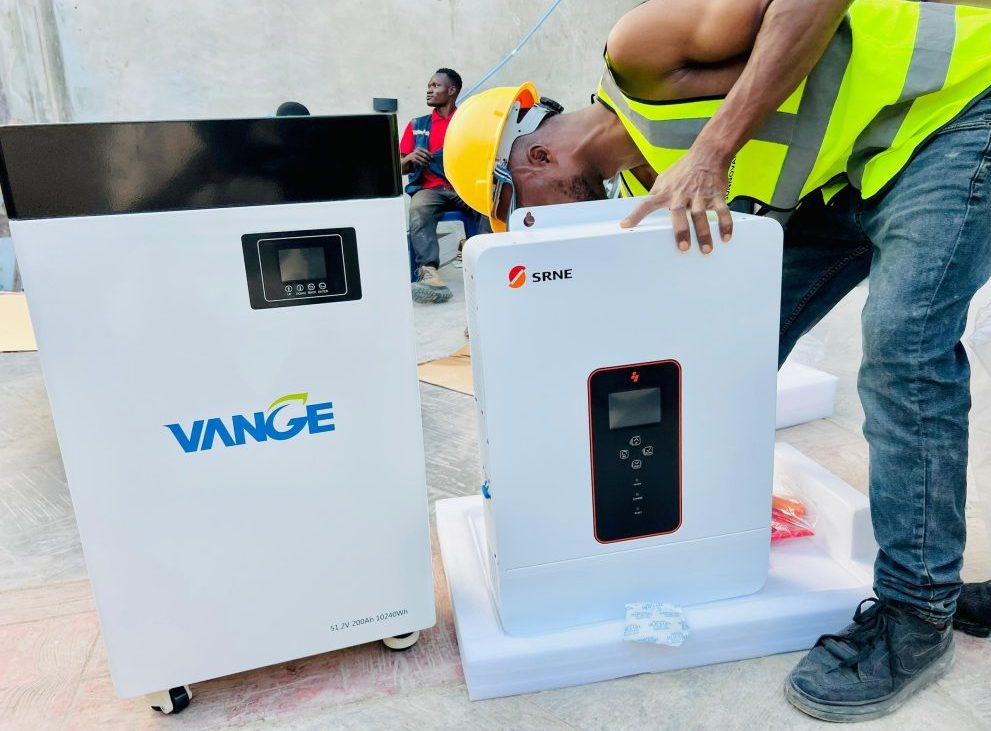
Sunnovate technicians setting up a Vange inverter and lithium battery

System finder

Get an indicative size in about three minutes

Six questions about what you run. The tool returns array size, inverter rating and storage capacity — and tells you plainly that a site assessment confirms it.

Start the system finder

How a project runs

From first call to commissioning

These four stages are a genuine sequence, which is why they are numbered.

01

Enquiry

You tell us the property and roughly what you run — by phone, WhatsApp or the system finder.

02

Site assessment

An engineer visits, measures the load, checks roof space, shading and cable routes, and confirms what is actually feasible.

03

Design & quote

You receive a specification and a price for that specification — array, inverter, storage, mounting and labour.

04

Install & commission

Our team fits and tests the system, hands it over working, and shows you how to monitor it.

The financial case

What a system has to beat

The comparison is not solar against zero. It is solar against what you already spend on grid electricity, generator fuel, servicing and eventual replacement — costs that recur forever and leave you owning nothing.

We model that comparison with your own numbers during the assessment, rather than publishing an average that fits nobody.

Request a savings assessment

What we compare at your assessment

Average monthly grid bill

Your figures

Generator fuel per month

Your figures

Servicing and parts, annual

Your figures

Typical system lifespan

Your figures

Indicative payback range

Your figures

We work these numbers out with you during the site assessment, using your real bills and generator hours.

Energy questions

What people ask before they commit

Can I run air conditioning on solar?

Yes, but it changes the system substantially — an inverter AC unit can double a typical household's daily energy on its own. It is the single most important thing to declare during sizing, because retrofitting capacity later costs far more than including it at design stage.

How much roof space do I need?

It depends on array size and module wattage, and on how much of the roof is usable once orientation and shading are taken into account. The site assessment measures this properly — an estimate from a satellite image is not reliable enough to design from.

Lithium or tubular batteries?

Lithium costs more up front, offers more usable capacity per unit of rated capacity, and generally lasts longer in daily-cycling use. Tubular has a lower entry cost and remains reasonable for lighter cycling. Which is better value depends on how hard you will cycle the bank.

Do I have to remove my generator?

No. Many clients keep the generator as a last resort while running everything else on solar, which cuts fuel use dramatically without removing the fallback. Hybrid inverters can be configured to accept generator input where that is wanted.

How long does an installation take?

It varies with system size, roof type and whether existing wiring needs work.

Next step

Start with a size, not a sales call

Run the system finder first. Then talk to us with a number in hand.