In stock now: Hikvision CCTV cameras & recorders, priced and ready to order Shop now →

Energy solutions
Solar systems
Designed around your energy use
Inverter solutions
Sized against your real load
Battery storage
Backup for the hours you need
Backup power
Reliable supply without the generator
By property & service
Residential energy
Homes, apartments, estates
Commercial energy
Offices, retail, facilities
Installation & maintenance
Fitting, commissioning, support
All energy solutions
Compare every option
Free system sizing
Not sure what size you need?
Answer six questions and get an indicative array, inverter and battery size.
Find My System →
Security & ELV
CCTV surveillance
Cameras, recording, remote viewing
Access control
Cards, keypads, biometrics
Fire alarm systems
Detection and alerting
Smart home automation
Locks, lighting, intercom
Plan & buy
Use cases
Home, office, shop, estate, facility
Security projects
Completed installations
Book a security survey
Site assessment and quote
Shop security products
Cameras and recorders in stock
Site survey
Know exactly what to install
An engineer maps coverage, entry points and power before you spend anything.
Book a Survey →
Energy products
Solar panels
Mono, poly and bifacial
Inverters
Hybrid and pure sine
Batteries
Lithium and tubular
Complete systems
Specified as one system
Security products
CCTV cameras
Hikvision IP and Turbo HD
Recorders (NVR / DVR)
4 to 64 channels
Access control
Biometric, card and keypad
Fire alarm
Panels, detectors, call points
In stock now
Cameras and recorders, ready to order
Order online and pay securely with your card, or order on WhatsApp.
Shop Now →
About Sunnovate
Who we are
Lagos-based energy and security engineers
Our approach
Assess, design, install, support
Projects
Recent installations
Contact & consultation
Talk to an engineer
Talk to us
+234 706 551 5774
Call us, Mon to Sat
info@sunnovatesystems.com
We reply within one working day
Chat on WhatsApp
Sales, solar or security team
1 Otigba Street, Ikeja
Lagos, Nigeria
Who we are
One team for power and protection
We design, supply, install and support both pillars, so nothing falls between contractors.
About Us →
Energy guides
What size inverter do I need?
Sizing from your actual load
Lithium vs tubular batteries
Which is better value
What drives solar system cost
The five deciding factors
Cut generator running hours
Reduce fuel spend
Security guides & tools
How many CCTV cameras?
Planning coverage properly
Choosing a security system
CCTV, access or fire first
All guides
Browse the full library
Find my system
Skip the reading, get a size
Buyer guides
Make the decision with the numbers
Plain-English guides written by the engineers who size and install these systems.
Read the Guides →
Energy solutions
Storage is what turns solar from a daytime saving into power you can rely on after dark. How much you need depends entirely on what you refuse to lose.
Why it matters
An array without a battery produces when the sun is out and nothing when it is not — which is precisely when most households need power most.
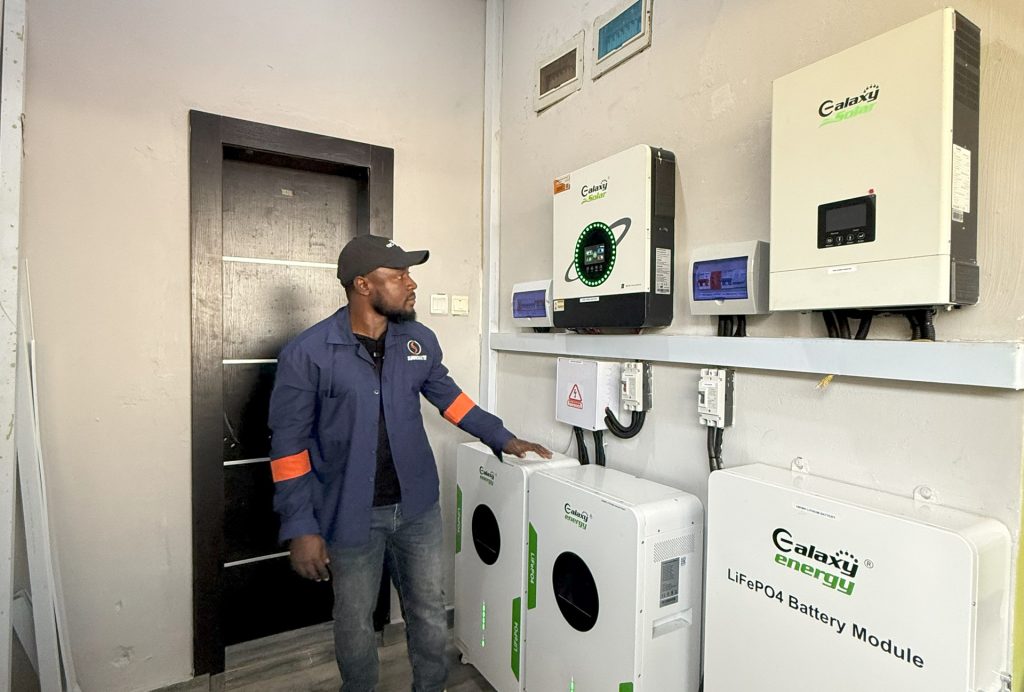
Storage moves the energy you generate during the day into the evening and overnight. It is also what lets a system carry you through an outage without starting a generator, and what protects sensitive equipment from the gap during a changeover.
Shifts daytime generation into evening and night use
Carries the property through outages without a generator
Reduces generator running hours and the fuel that goes with them
Supports a move toward genuine energy independence
What sets the size
Battery capacity is an output of these decisions, not a starting point.
What you run during the backup window — not your total daily consumption averaged flat.
Eight hours covers a night. Twelve covers a night plus a dull morning. Twenty-four is a large and expensive bank.
Whether the bank is cycled daily or held mainly in reserve changes both sizing and chemistry.
Battery voltage and chemistry have to match the inverter and the array feeding them.
How we size it
The same sequence every time, because storage sized from a guess is storage that disappoints.
01
Which appliances must stay on during an outage, and for how long each.
02
How many hours of autonomy you actually need — the honest number, not the reassuring one.
03
Usable capacity is not rated capacity. Depth of discharge and round-trip losses are built into the figure.
04
Chemistry and voltage confirmed against the inverter and array.
Where storage earns its cost
The right bank for a family home is the wrong bank for a clinic. These are the patterns we design for most often.
Evening and overnight load with nobody available to start a generator at 2am.
A bank sized to carry lighting, refrigeration, fans and connectivity through to sunrise.
Computers, networking and cooling that cannot drop mid-working-day.
Storage sized around trading hours, with critical circuits prioritised on the backup path.
Cold storage, tills and lighting where an outage stops trade immediately.
Capacity focused on the loads that stop revenue when they stop running.
Security equipment, pumps and monitoring that must stay up regardless.
Continuous supply designed alongside the security installation rather than retrofitted onto it.
Shop
Battery capacity is quoted per property once the load and backup window are confirmed.
Common questions
That depends on your load and the usable capacity installed. The system finder estimates runtime from the appliances you select and the hours you ask for. A site assessment then confirms it against real measured demand.
Lithium costs more up front, gives more usable capacity per unit of rated capacity, and generally lasts longer under daily cycling. Tubular has a lower entry cost and remains reasonable for lighter cycling. Which is better value depends on how hard you will cycle the bank.
You cannot use all of a battery’s rated capacity without shortening its life. Sizing accounts for that, which is why a bank rated at ten units does not give you ten units of backup — and why quoting only rated capacity is misleading.
Often, yes, provided the inverter and configuration were chosen with expansion in mind. Tell us at design stage if you expect demand to grow and we will specify accordingly.
It varies by chemistry and installation. Maintenance and support arrangements are available for systems we install — tell us what is installed and we will confirm what a service arrangement covers.
The same team that designs your power system installs the cameras, access control and fire detection that protect it — specified together, on one backup path.
Next step
Tell us what has to stay running and for how long. We will work out the rest.